
Dell XPS 13 9350 teszt: az utolsó XPS vagy egy végső körítés a dizájn új arculatához?
Those who cannot remember the past are condemned to repeat it. It's an aphorism that, in retrospect, Dell's XPS team would have done well to frame and put on the wall. Since its inception in 2012, several generations of the XPS 13 have come and gone. Some were fantastic, some flawed - but at its heights, few ultraportables did it better.
Dell XPS 13 9350: SpecificationLast year's model, the XPS 13 9340 - which employed Intel's underwhelming Meteor Lake chips - has since been retired, but the chassis remains the same. You now have two choices: the Qualcomm Snapdragon-powered XPS 13 9345, or the XPS 13 9350 we have here, which houses Intel's latest Lunar Lake generation of mobile chips.
Pricing flits into the realms of the reassuringly expensive. The entry-level model begins at £1,399, pairing an Intel Core Ultra 5 226V, 16GB of on-package LPDDDR5X RAM, a 512GB NVMe SSD, and a non-touch 13.4in, 1,920 x 1,200 IPS screen. All the usual upgrades are on offer. You can double the RAM, but as the Lunar Lake architecture physically locates the system memory on the CPU itself, doubling the RAM forces you to upgrade to an Intel Core Ultra 5 258V, which pushes the base price to £1,599.
Processors reach all the way up to the Core Ultra 9 288V, but the small increases in clock speed and L3 cache size mean that the performance jumps are modest. At the time of writing, it was only £50 to upgrade to the top-end Core Ultra 9 288V, but £150 for the slower 268V.
Upgrading the storage is relatively affordable - it's only £50 to double the 512GB to 1TB, and a slightly less sensible £150 to double that to 2TB. Tick that 3K OLED touchscreen and your wallet will be £200 lighter; a more power-efficient QHD+ IPS touchscreen is £250.
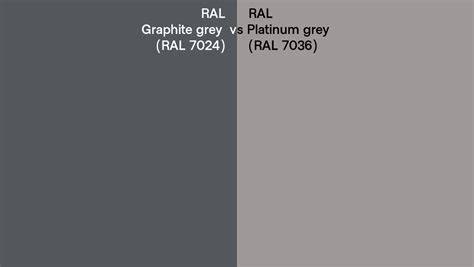
Looks-wise, you can decide between graphite grey or platinum silver. We definitely prefer the moody graphite option, not least as it's just a tad less eager to retain fingerprints and smudges.
This is where it falls apart for this generation of the XPS 13, and the blame lies squarely on the decision to adopt the 'unique' keyboard from the 2023 XPS 13 Plus. Our reviewer at the time was smitten, but many other reviewers - this one included - have found themselves feeling far less romantically inclined. While the keyboard's zero-lattice design both looks and sounds like a good idea, offering the largest possible keys in the smallest possible space, it's unpleasant to type on. The very absence of a lattice separating the keys makes typos far more commonplace, as it's impossible to find your way around purely by feel.
Other little design choices only serve to pile on the irritation. The combined power button and fingerprint reader sit just alongside the backspace key. This looks neat, but delete some text a little too eagerly, and an errant prod turns off your laptop. If you've ever wondered how you could further hobble a keyboard in 2025, then one idea would be to replace the top row of function keys with a row of backlit capacitive buttons that offer no haptic feedback whatsoever.
This means that some of our favorite buttons - we're big fans of Escape and Delete keys here at ITPro - are now relegated to imprecise touch buttons which are impossible to find by feel alone. Yes, the touchbar does make it marginally easier to change the volume or brightness, but this isn't an unsolved design problem: Apple, for one, has managed to cater to the two types of users - those that prefer function keys; those that prefer volume controls - for as long as we can remember, simply by allowing users to customize the default behavior of the function row. This, on the other hand, is a solution in search of a problem.
The touchpad is unique in a far more inoffensive manner: it's hidden behind a panel of Gorilla Glass which stretches across the width of the laptop. The touchpad is normal-sized - it spans from the left hand edge of the space bar to just left of the Copilot key and there's about a centimeter of dead space above and below. The fact you can't see it isn't a big issue, thankfully, as you get used to knowing where it is.
The touchpad works fine. The glass finish still feels wonderfully smooth under the finger, and both single - and multi-fingered gestures work reasonably reliably. So far, we haven't experienced the occasional and infuriating stuck button issues that we experienced on the 9340 and 9345 models - we'll report back if that changes.
In fact, side-by-side testing suggests that Dell has either replaced the touchpad found on the 9340 and 9345 models or that it just uses a variety of interchangeable parts. Whichever is the case, the haptics in our review unit produced a noticeably more crisp, high-frequency click than the touchpad on the XPS 13 9340. Go back to the old model and clicks feel muffled and dull by comparison, even with the touchpad feedback cranked up in Windows.
ConnectivityConsider this section of the review as art imitating life. There are two Thunderbolt 4-compliant USB-C ports, one on either edge. There is no 3.5mm audio out. There is Wi-Fi 7 and Bluetooth 5.4. When even Apple's MacBook Air manages to squeeze in two Thunderbolt 4 ports, a MagSafe charging port, and a headphone socket, the XPS 13's connectivity veers towards the ludicrously restrictive.
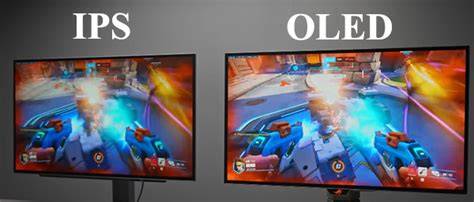
DisplayThe XPS 13 lays claim to a world first: tandem OLED technology makes its laptop debut in the guise of a pin-sharp 2,880 x 1,800 touchscreen. And you guessed right: the tandem designation means that two OLED panels are literally overlaid on top of one another. The benefits are that each panel can operate at a lower brightness, thus simultaneously boosting overall brightness and reducing the chances of burn-in on either panel.
The panel's color coverage is excellent in Windows: 100% sRGB, 100% DCI-P3, and 98% Adobe RGB in our tests, with a peak brightness around 448 cd/m2. However, HDR implementation has quirks: all YouTube HDR videos looked awful with blown-out highlights, and Netflix content suffered similarly. The issue appears brightness-dependent and may improve with software/drivers updates. If you want to save £200, you can downgrade to the standard 1,920 x 1,200 IPS display, which still offers good color accuracy and battery life.
Intel had one job with its Lunar Lake generation, and that was to make amends for the Meteor Lake generation, which found itself comprehensively outgunned for performance and battery life by both Apple and Qualcomm. Broadly speaking, it's a success. CPU performance is broadly similar to before, albeit slower in multi-core tests; battery life is improved (albeit with caveats), and GPU performance is given perhaps the biggest boost. Casual gaming on a 1.18kg sliver is now entirely feasible, so hats off to Intel's GPU teams there.
One word to the wise: if you're expecting huge performance deltas between the various Core Ultra 5, Ultra 7, and Ultra 9 chips, then dash those expectations. All the Lunar Lake processors have 4 Performance cores and 4 Efficiency cores with no Hyper-threading, and Turbo Boost clocks are in a tight 4.5GHz to 5.1GHz range. The top three processors have a little more L3 cache at their disposal - 12MB instead of 8MB - and the AI-accelerating NPU is boosted from 40 tops to 48 tops, but dramatic performance increases are off the table.
Battery life has made a big leap forward with this generation, too, but the figures don't look as impressive as they could: OLED displays are more power-hungry than IPS variants. The non-OLED model lasted 14 hours and 1 minute in our review, which is a useful step forward, though still behind some rivals. Dell XPS 13 9350: Is it worth it? Despite some improvements, the answer remains an emphatic no. For anyone who needs to type regularly, the keyboard is a drag; the connectivity is awkwardly restrictive, and not one facet of the pretty design makes it more pleasurable to use than any of the competition.
Don't get us wrong, it's great to see Intel finally delivering on its side of the bargain, with a welcome boost to efficiency going hand in hand with genuinely useful gains in GPU performance. But it's not enough to offset the worst aspects of this design: one that deserves to be learned from - and ultimately consigned to the history books. Perhaps though, this is a fitting end for the XPS 13 after all. The flawed, original model in 2012 had thrilling potential. And the insanely expensive Dell Adamo which preceded it, and arguably inspired it, was bold, gorgeous, and awful - albeit more the latter than the former. With this final offkey Swan song, maybe we've finally traveled full circle. Are we really looking at the last ever XPS?
Dell’s long-running line set the trend for lustworthy laptops that ran Windows, and was arguably the closest anyone got to besting Apple for design nous - but there was no room for it in the firm’s 2025 rebrand. I’m being dramatic, of course: the spirit of XPS will stick around under Dell’s new Dell Premium range, and you’ll be able to buy this particular ultraportable for a long while yet. It only appeared at the tail end of 2024, adding the latest Intel ‘Lunar Lake’ chipsets to a range that until then exclusively used Qualcomm’s Snapdragon X Elite silicon. The internals might’ve changed, but this XPS 13 is virtually indistinguishable from the Snapdragon-powered one I tested in September 2024. It still feels nicer than many of the Copilot+ laptops I’ve used to date, and my review unit looked very tidy in Platinum colours (silver aluminium outside, and white glass underneath).
The darker Graphite seems a bit more businesslike, although I’ve only seen it in photos. The XPS 13 remains a top choice for travel, being just over 15mm at its thickest point and weighing in at only 1.22kg. That’s just a few grams heavier than the Snapdragon version, likely because of a different motherboard and cooling system. Dell still hasn’t felt the need to add more connectivity, so you’re limited to just one USB4 Type-C port on each side of the system. When plugging in to charge, that just leaves a single free port. That controversial capacitive shortcut row remains when you lift the lid, replacing traditional function keys and illuminating to match the keyboard’s white LED backlight.
The keyboard itself run edge-to-edge, with no space for up-firing speakers like the ones seen on the bigger XPS 14. You’ll again find the power button in the top right corner of the keyboard tray, and it continues to act as a fingerprint sensor for biometric bypassing of the Windows lock screen. Opting for Intel over Qualcomm doesn’t rule you out from any of Dell’s three XPS 13 display options. The laptop normally ships with a full HD+ resolution LCD, but there’s also a touch-sensitive QHD resolution panel. The touch-friendly tandem OLED screen on my review unit is arguably the best of the bunch, with a fantastically sharp 2880×1800 resolution and the deep, inky blacks that LCD panels simply can’t get close to.
Colors are vibrant and dynamic, while contrast is impeccable. It surprisingly isn’t the last word in brightness however, falling behind that of the MacBook Air M3 despite the tandem OLED tech. A glossy finish meant light reflections were a little distracting at times, and there’s not a massive amount of screen tilt to make up for it. Still, I appreciated the skinny screen bezels on all four sides, and colour gamut coverage makes it a great choice for creative work. At the time of writing, it carried a $300/£300 premium over the full HD LCD panel, though was cheaper than the QHD+ option.
is XPS 13 has the same side- and down-firing 2W speakers as the Snapdragon model, meaning sound is unchanged. The keyboard tray hasn’t changed at all from the last time I tested an XPS 13, meaning you’re still getting tightly-grouped keys with ever-so-slightly concave caps that are supposed to help you stay in position when touch-typing. I also remain baffled as to why certain keys, like the tab and caps lock keys, are so big. Having larger than full-size left and right arrow keys, but half-height up and down arrows, is a pain for usability. There’s an OK amount of key travel here, and the key caps are spring enough that I was never uncomfortable while typing. Bumping the escape and delete keys to the capacitive shortcut row still feels like a misstep. There’s no vibration or haptic feedback to let you know you’ve pressed a key or not, so you’ve got to take your eyes off the screen to make sure. At least I didn’t experience the same click-and-drag issues as with the Snapdragon-powered XPS 13. The invisible glass touchpad worked well throughout testing, though I wish the haptic feedback were a little stronger.
Intel’s ‘Lunar Lake’ Core Ultra Series 2 processors were meant to restore some of the firm’s dignity, after being given a pasting on both performance and efficiency by Qualcomm on the first time of asking. However, synthetic benchmarks put it a half-step behind the Snapdragon X Elite XIE-80-100 for raw performance, and certain jobs on apps optimised for ARM architecture proved faster on the Qualcomm variant. Encode many videos using Handbrake? The Snapdragon system will take half the time. Positions are reversed in graphics tests and games, where Intel’s more mature GPU knowhow helps it eke out a 10-20% lead depending on the test. Stick to modest resolution and detail settings, and current games will often be genuinely playable.
DELL XPS 13 9350 Laptop | An Intelligently Designed Workhorse
Battery life has made a big leap forward with this generation, too, but the figures don't look as impressive as they could: going by other reviews across the internet, the OLED display is noticeably more power-hungry than the less-exciting IPS variants. That said, there's nothing to complain about here. Where the previous Meteor Lake XPS 13 lasted 12 hours and 15 minutes in our battery rundown test, the Lunar Lake model lasted for a creditable 14 hours and 1 minute. That's still substantially behind the 17 hours and 25 minutes of the Qualcomm Snapdragon model, but it's a useful step forward.
Dell XPS 13 9350: Is it worth it? Despite some improvements, the answer remains an emphatic no. For anyone who needs to type regularly, the keyboard is a drag; the connectivity is awkwardly restrictive, and not one facet of the pretty design makes it more pleasurable to use than any of the competition.
Don't get us wrong, it's great to see Intel finally delivering on its side of the bargain, with a welcome boost to efficiency going hand in hand with genuinely useful gains in GPU performance. But it's not enough to offset the worst aspects of this design: one that deserves to be learned from - and ultimately consigned to the history books. Perhaps though, this is a fitting end for the XPS 13 after all. The flawed, original model in 2012 had thrilling potential. And the insanely expensive Dell Adamo which preceded it, and arguably inspired it, was bold, gorgeous, and awful - albeit more the latter than the former. With this final offkey Swan song, maybe we've finally traveled full circle. Are we really looking at the last ever XPS?
Dell’s long-running line set the trend for lustworthy laptops that ran Windows, and was arguably the closest anyone got to besting Apple for design nous - but there was no room for it in the firm’s 2025 rebrand. I’m being dramatic, of course: the spirit of XPS will stick around under Dell’s new Dell Premium range, and you’ll be able to buy this particular ultraportable for a long while yet. It only appeared at the tail end of 2024, adding the latest Intel ‘Lunar Lake’ chipsets to a range that until then exclusively used Qualcomm’s Snapdragon X Elite silicon. The internals might’ve changed, but this XPS 13 is virtually indistinguishable from the Snapdragon-powered one I tested in September 2024. It still feels nicer than many of the Copilot+ laptops I’ve used to date, and my review unit looked very tidy in Platinum colours (silver aluminium outside, and white glass underneath).
Az új Dell XPS 13 9350: design és felépítés a megmunkált alumínium test, a Gorilla Glass Victus előlapi panel és a kapacitív érintés-sor által tervezett minimalizmus felől közelíti meg az ultrakompakt kategóriát. A kijelzők közötti választék között megtalálható az OLED tandem panel és a klasszikus IPS-lcd, melyek mind segítik a felhasználó igényeit, legyen szó szöveges munkáról vagy kreatív tartalomról. A tónusos megjelenítés és az acélos szerkezet együtt formálja a készülék karakterét, amely egyszerre hordoztat és kiemeli a készüléket a piacon.
tags: #dell #xps #13 #9350 #teszt